

106th Cavalry Group
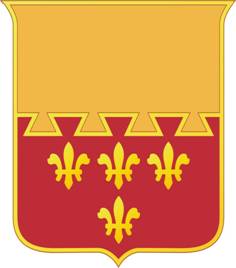
The US Army's 106th Cavalry Group was a mechanized reconnaissance unit that played a discreet but essential role on the European theater during World War II. Heir to the traditions of the US cavalry, the group embodied the transition from the pre-war horse cavalry to modern units equipped with light armored vehicles, jeeps, and armored cars.
Activated in 1942, the 106th Cavalry Group was organized around two reconnaissance squadrons (the 106th Cavalry Reconnaissance Squadron and the 121st Cavalry Reconnaissance Squadron). Its training emphasized mobility, observation, aggressive patrols, and the ability to operate autonomously across wide fronts, often ahead of infantry or armored divisions.
Deployed to Europe in 1944, shortly after the Normandy landings, the group was quickly engaged in reconnaissance and security missions for General George S. Patton's Third U.S. Army. As American forces broke through the German front after Operation Cobra, the 106th Cavalry Group advanced rapidly through France, securing roadways, capturing prisoners, locating enemy positions, and protecting the flanks of the main combat units. These missions, while less spectacular than major infantry or tank battles, were vital to maintaining the pace of the Allied advance.
In the fall of 1944, the group operated along the German border, participating in cover and reconnaissance missions under increasingly difficult conditions. During the Ardennes offensive in December 1944, the 106th Cavalry Group was engaged in delaying and surveillance operations in the face of the surprise German attack. Although it did not bear the same number as the 106th Infantry Division, which was hit hard at Saint-Vith, the cavalry group also faced fierce fighting, often outnumbered, and had to demonstrate great tactical flexibility to avoid encirclement while continuing to provide crucial intelligence.
In terms of service records, the 106th Cavalry Group received campaign credits for France, the Rhineland, the Ardennes-Alsace, and Central Europe. Although it did not achieve the notoriety of the large combat divisions, it built a solid reputation for reliability, daring, and efficiency in a demanding and often dangerous role. Its actions perfectly illustrate the importance of reconnaissance units in modern warfare: seeing without being seen, striking quickly, withdrawing without being pinned down, and providing commanders with the information essential for victory.
In 1945, the 106th Cavalry Group took part in the resumption of the Allied offensive in Germany. It was engaged in reconnaissance prior to the crossing of major rivers, notably the Moselle and the Rhine, and then accompanied the rapid advance of American forces into central Germany. The group contributed to the encirclement of the Ruhr pocket, monitored enemy movements, intercepted retreating German columns, and participated in the capture of thousands of prisoners. In the final weeks of the war, its forward elements penetrated deep into German territory, maintaining contact with the enemy until the final collapse of the Reich.
In terms of service records, the 106th Cavalry Group received campaign credits for France, the Rhineland, the Ardennes