

Bubbles against bullets
Comic books: At the forefront of the U.S. entry into the war
In the late 1930s, as the world was sliding into fascism, a generation of young American creators—most of whom came from immigrant families—entered a burgeoning cultural industry: the world of comics. In the shadow of official rhetoric fighting the oppressor, these creators turned comic books into an ideological battleground where good and evil clashed through pencil strokes and speech bubbles.
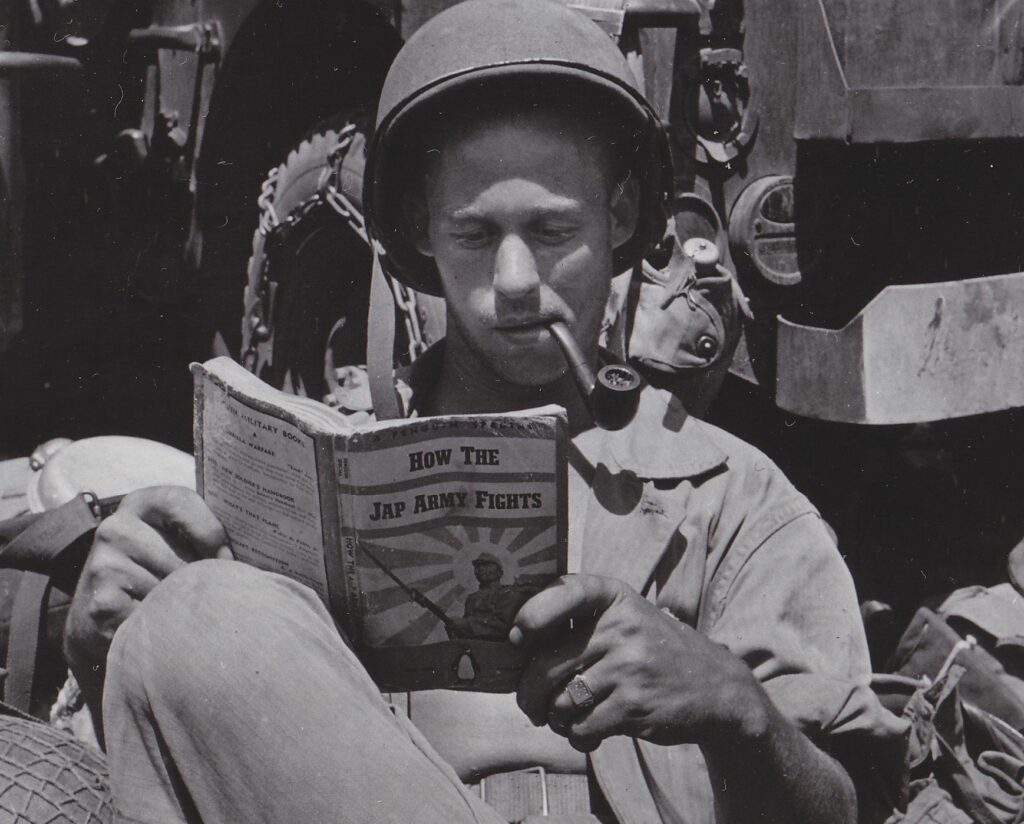
From their imagination emerged paper superheroes—figures of courage and resistance—who denounced Nazi and Japanese barbarism and championed democratic values. Distributed on a massive scale, comics became a major tool of propaganda and moral support during World War II for American soldiers serving in Europe and Asia. Their simple, visual, and emotional language transcended social classes and generations, far beyond what official rhetoric could achieve at the time. Faced with this growing influence, the U.S. government quickly recognized the potential of this new medium.
Superheroes in the Service of Freedom
In the run-up to and during World War II, comic books became fully integrated into the national effort: they helped rally public support and spread patriotic messages in the fight against totalitarian regimes. Superheroes embodied an idealized America, ready to defend freedom around the world.
To mark the release of the comic book *John Steele, the Paratrooper from Sainte-Mère-Église*, published by the Airborne Museum in collaboration with Éditions Nationale 13, the exhibition “Comics Go to War” draws an unexpected parallel between two heroic figures: John Steele and Superman. Like Superman, the first superhero, John Steele was originally from Metropolis, Illinois. This exhibition juxtaposes the paper superhero with the very real fate of John Steele, the famous paratrooper who remained suspended from the bell tower of Sainte-Mère-Église on the night of June 5–6, 1944. Today, paratrooper John Steele walks the pages of comic books long frequented by costumed heroes. One city, two heroes: one imaginary, the other a part of history.
From comic books to blockbusters: the rise of superheroes
A century of evolution
The history of superheroes is one of constant transformation. Originating in newspaper comic strips in the late 19th century, they came into their own in 1938 with Superman and became tools of propaganda during World War II.
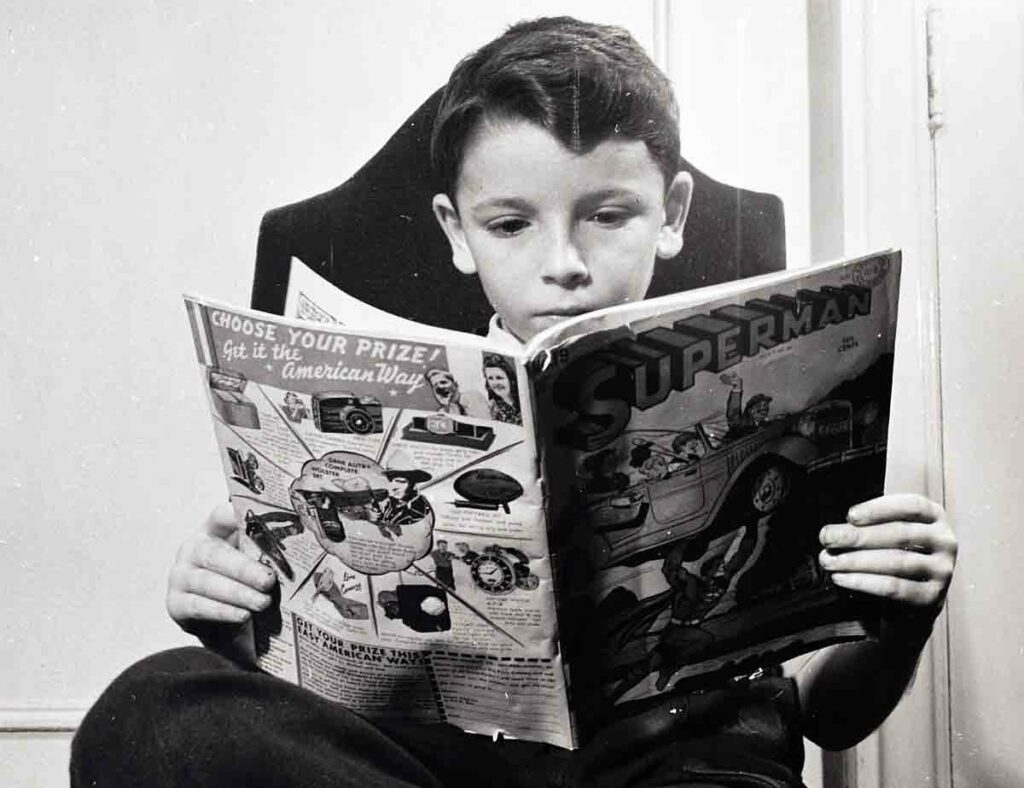
After 1945, having been censored and then revived, they underwent a transformation: Marvel humanized its heroes with Spider-Man (1962), a vulnerable teenager plagued by self-doubt. Black Panther (1966) embodied the civil rights movement. Comics became darker and more mature, capable of both criticizing and celebrating America.
The Hollywood breakthrough
Then came the tidal wave. Starting in 2008 with *Iron Man*, superheroes took over movie screens around the world. Avengers: Endgame (2019) grossed $2.8 billion. The Marvel Cinematic Universe has amassed over $30 billion in box office revenue. Of the 50 highest-grossing films in history, nearly 20 are superhero movies. Disney+, Amazon, and Netflix are investing fortunes in series with Hollywood-sized budgets.
Superheroes are no longer a genre: they are the popular cinema of the 21st century. What was marginal in 1940—young immigrants drawing heroes for 10 cents—has become the most powerful cultural industry on the planet.
Heroes for Our Time
But they have changed. Iron Man is an alcoholic, Batman is violent, Captain America discovers that his government has been infiltrated. The films question power, surveillance, and moral responsibility. Series like The Boys depict corrupt and dangerous superheroes.
From 1940s propaganda to global blockbusters, the superhero has spanned a century. Born to sell newspapers, exploited to galvanize soldiers, he now reigns over mass culture and continues to reflect our fears, our hopes, and our contradictions.
Comic books have conquered the world.